
The Future of Cloud Computing: Navigating Trends and Innovations - Solitaire Infosystems
Request a Quote !

Request a Quote !

Request a Quote !

Blogs

The Future of Cloud Computing: Navigating Trends and Innovations

  • By: admin
  • date: Feb 7, 2024
Blog Image

The dynamic field of cloud computing is leading the way in this transition of the digital world. We’ll go into the future in this exploration to find out what technologies and trends are changing the way we engage with technology. Prepare yourself for an adventure through the skies, where the digital frontier’s sophistication and simplicity collide.


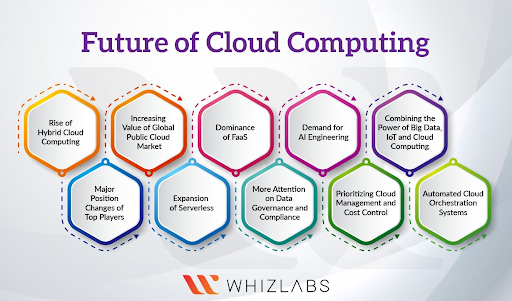
Important Predictions and Trends in Cloud Computing 


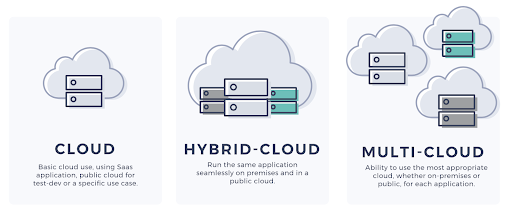
Hybrid and multi-cloud: cloud methods are becoming more and more popular among businesses as a way to improve cloud infrastructure resiliency, minimize vendor lock-in, and maximize performance. Scalability and cost-effectiveness are made possible by hybrid cloud solutions, which combine public and private clouds in a hybrid architecture.

Serverless Computing: Developers can now concentrate on innovation rather than infrastructure administration because  the paradigm change toward serverless cloud computing technology, which improves agility, scalability, and cost-effectiveness.

Data Governance and Privacy: Ensuring data security and user privacy, as well as fostering trust in cloud environments, require strong data governance procedures and adherence to legal frameworks.

Microservices and containerization: These methods encourage innovation in application deployment by streamlining development, facilitating effective scaling, and enhancing resource use.

Edge Computing: As edge computing gains traction, it is reducing latency, maximizing bandwidth, and enabling real-time processing, setting the stage for rapid IoT growth and enhanced user experiences.


Enhancing Cloud Security: Safe Hybrid & Multi-Cloud Setups


Using resources and services from several cloud providers is part of a multi-cloud environment. This could involve a mix of on-premises infrastructure, private clouds, and public clouds. By deploying workloads in the cloud that best meets their needs, a multi-cloud strategy can reduce vendor lock-in, optimize costs, and improve application performance.


Strategies for Secure Multi-Cloud Environments 


Centralized Identity and Access Management (IAM): Ensuring uniform access restrictions and lowering the risk of unauthorized access is achieved by using a single IAM solution across all clouds.

Data Encryption: Protecting sensitive information from unwanted access requires encrypting data in all cloud environments, both during transmission and at rest.

Standard Security Policies: Enforcing and establishing standard security policies over all cloud platforms guarantees a consistent degree of compliance and protection.

Threat Monitoring and Incident Response: The organization’s capacity to quickly detect and address security breaches is improved by implementing strong threat detection tools and well-defined incident response procedures across all clouds


Collaborating with a Cloud Service Provider

A cloud service provider must be partnered with for effective security in a multi-cloud  environment. In addition to helping you stay informed about the overall security of the multi-cloud ecosystem, cloud vendors frequently provide security tools and services. Organizations must find a balance between protecting resources and fostering innovation in the pursuit of multi-cloud security. The future of cloud computing will be revealed through the interaction of security, innovation, and a multi-cloud strategy.


Adopting Hybrid Cloud Technology 

Businesses are increasingly using hybrid cloud solutions, which combine public and private clouds strategically, as the cloud computing market changes. This creative method makes use of the advantages of both models to produce a computer environment that is adaptable, effective, and safe.


Hybrid Cloud Benefits 

A number of benefits are provided by hybrid clouds to meet various business requirements.


Scalability:   Companies are able to adjust their resource levels as needed. Even if public clouds scale quickly, incorporating private clouds guarantees the security of sensitive workloads and important data.

Flexibility :  Depending on their needs, organizations can decide where to assign workloads. Mission-critical operations can be housed in the private domain, while non-sensitive tasks can leverage the power of public clouds.

Better Data Security: By separating data and apps, hybrid clouds improve security. Non-sensitive data can use public cloud resources, while sensitive data can be kept in a private cloud with restricted access.

Cost Efficiency:   By using affordable public cloud resources for non-sensitive processes, hybrid architectures minimize costs by avoiding the requirement for unnecessary infrastructure investment.

Compliance Adherence: Hybrid clouds are advantageous for sectors like banking and healthcare that have strict regulatory standards. Less sensitive components should be stored in public clouds, but sensitive data can be kept in a compliant private cloud. 


Hybrid cloud solutions are advancing significantly across a number of industries

Finance: Banks use public clouds for client-facing apps and hybrid clouds to separate customer data.

Healthcare: While using public clouds for non-confidential tasks like administrative functions, medical organizations also securely store patient records on private clouds. It helps healthcare providers to optimize costs and meet compliance standards in a balanced manner.

Gaming: By fusing private servers and public cloud resources for real-time communication, hybrid clouds enable game creators to manage computationally demanding jobs like graphics rendering. It facilitates adaptable implementation choices for the gaming industry as well as the larger software sector.

Manufacturing: By safeguarding intellectual property in private clouds, hybrid clouds allow manufacturers to monitor production processes using IoT devices. All things considered, it can assist in facilitating flexible and scalable supply chain management. 


Serverless Computing

Computing Without a Server Despite its name, server less computing doesn’t completely do away with servers; rather, it gives developers more abstraction over infrastructure management. Under this strategy, server provisioning, scaling, and maintenance are handled by cloud providers, leaving developers to concentrate only on writing code.


Benefits of server computing:

Numerous benefits of server less architecture meet the needs of contemporary businesses.


Enhanced Scalability: In response to demand, server less platforms automatically scale their resources. Applications can handle variable workloads without manual intervention thanks to this “pay-as-you-go” strategy.

Cost-effectiveness: Companies only pay for the computational resources used in the actual execution. Because there is no longer a need to continuously provision and maintain resources, expenditures are decreased.

Simplified Deployment: Applications can be deployed more quickly and have a shorter time to market when developers concentrate on coding instead of maintaining servers.

Auto-scaling: Serverless platforms take care of scaling on their own, saving human intervention and guaranteeing top performance.

Event-Driven Architecture: This approach enables the efficient management of diverse use cases by allowing serverless tasks to be triggered by events, such as HTTP requests, database modifications, or file uploads.


Handling the Transition 

Serverless architecture is being adopted by businesses more frequently for a variety of reasons. 


Microservices: In addition to microservices, serverless architecture allows services to be deployed and scaled independently.

Batch Processing: Because serverless functions only devote resources while they are in use, they are perfect for sporadic jobs like data processing and backups.

Web Applications: Without requiring infrastructure maintenance, serverless backends offer scalable web application foundations.

IoT: Serverless computing’s event-driven architecture is well suited for IoT applications, in which devices initiate processes in reaction to real-time data. 


Industry Momentum 

Finance: Able to provide real-time, automated customer service through the use of serverless chatbots and virtual assistants. Furthermore, it can support the operation of financial applications like fraud detection and real-time payment processing.

Healthcare: Automatically identifying abnormalities in medical pictures, such as MRIs and X-rays, to help medical practitioners diagnose patients. Additionally, it can support telemedicine services, remote monitoring, and virtual doctor-patient consultations, offering an affordable healthcare option.

Manufacturing: Track stock levels and create purchase orders to automate inventory management. In order to identify irregularities and anticipate equipment failures, it can also evaluate sensor data from production lines. 


The Architecture of Microservices and Containerization 

Microservices architecture and containerization have become essential tools that will drive efficiency and creativity in cloud computing going forward. The capacity of these cutting-edge techniques to improve agility, scalability, and portability in cloud systems has led to their enormous appeal.


Containerization Promotes Agility 

The process of packing programs and their dependencies into separate pieces called containers is known as containerization. These containers guarantee consistent performance independent of the underlying infrastructure by encapsulating the code, runtime, system tools, and libraries of an application. Developers can create, test, and implement applications across a variety of contexts, including production servers and development workstations, with ease because to  its agility. 


Microservices’ Scalability and Flexibility 

Containerization is enhanced by microservices design, which divides larger programs into smaller, loosely linked services. By addressing a particular functionality, each service encourages modularity and reusability. Because microservices may be independently built, deployed, and scaled, they allow organizations to react quickly to changing demands. Additionally, by reducing the effect of a single service failure on the entire program, this method improves overall reliability. 


Effects on Diverse Industries


Finance: Financial firms use containerization to execute transactions and handle sensitive data in secure, isolated environments.

Healthcare: Healthcare professionals may quickly implement apps that facilitate patient data management and telemedicine by utilizing containerization.

Gaming: The gaming industry uses microservices and containerization to enable in-game updates and upgrades without affecting gameplay. 


Edge Computing


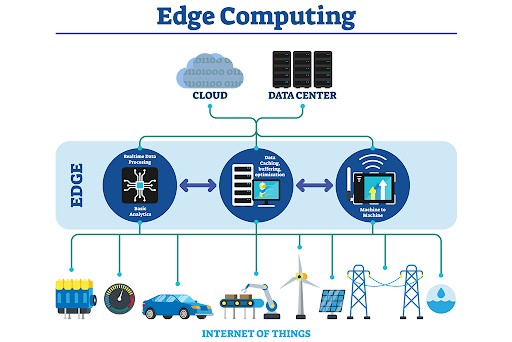
There is no denying that this cloud computing movement is revolutionary. Edge computing, which is commonly used at the “edge” of the network, moves computation closer to the data source than standard cloud architecture, which centralizes data processing and storage in far-off data centers. This close proximity lowers latency, improves real-time processing capabilities, and resolves bandwidth-related issues. 


Taking Care of Latency and Bandwidth Issues 

For applications like Internet of Things devices, driverless cars, and remote healthcare solutions that demand instantaneous reaction, latency—the time interval between sending and receiving data—is a crucial concern. By processing data locally, one can minimize the amount of information that needs to be transmitted to and from remote data centers, therefore reducing latency. The nearby placement of edge servers or gateways enables this quick processing. 

Bandwidth consumption is another problem. Network resources may be strained when massive amounts of data are transmitted to central servers. Edge computing maximizes the use of available bandwidth by processing information locally and only transmitting necessary data to the cloud. In addition to reducing network congestion, this also lowers costs and boosts productivity. 


Processing Capabilities in Real Time 

Real-time insights are necessary for some applications in order to make quick decisions. Imagine a factory where sensors are used to track the performance of the machinery. Edge computing eliminates the latency involved in sending data to a distant cloud server, allowing for instantaneous data analysis that spots abnormalities and possible problems. Businesses are able to respond quickly because to this quick processing, which reduces downtime and increases operational efficiency.


Practical Use Cases 


Finance: Edge computing helps with fraud detection and real-time risk analysis. At the edge, transaction processing and data analysis might enable faster reactions to possible threats.

Healthcare: By processing vital signs locally, wearable health gadgets shorten response times and enable instant notifications for critical conditions.

Manufacturing: By evaluating sensor data from the manufacturing equipment, real-time quality controls on production data and predictive maintenance are made possible.

Autonomous Vehicles: Self-driving automobiles must be able to make quick decisions by analyzing sensor data in real time. 


What Does Cloud Computing Hold for the Future?


Cloud computing has a lot of potential to innovate and change business operations in the future. Understanding these developments and actively influencing them is crucial to staying ahead of the game. By doing this, organizations will meet consumer and business demands while improving scalability, being cost-effective, and being more competitive. Accept change and incorporate these developments in cloud computing into your business plan. The changing terrain benefits those who remain safe and flexible. 


Conclusion 

It’s evident that the development of cloud computing has involved more than just technological advancement as we find ourselves at a turning point in the future. It’s a story of change, an inventive tale, and a promise of boundless opportunities. In summary, cloud computing’s future is a dynamic force that will continue to influence our digital world rather than a static destination. In this future, enterprises will view scalability as a competitive advantage, security will surpass traditional safeguards, and sustainability will be a key component of all technical undertakings. By focusing on the requirements of the user, technology becomes a useful companion rather than an oppressive force. Unprecedented computational powers are made possible by the quantum leap into the future, opening the potential for inventions that need more investigation.


About the Author

Comments